 Jan 15 / 2026
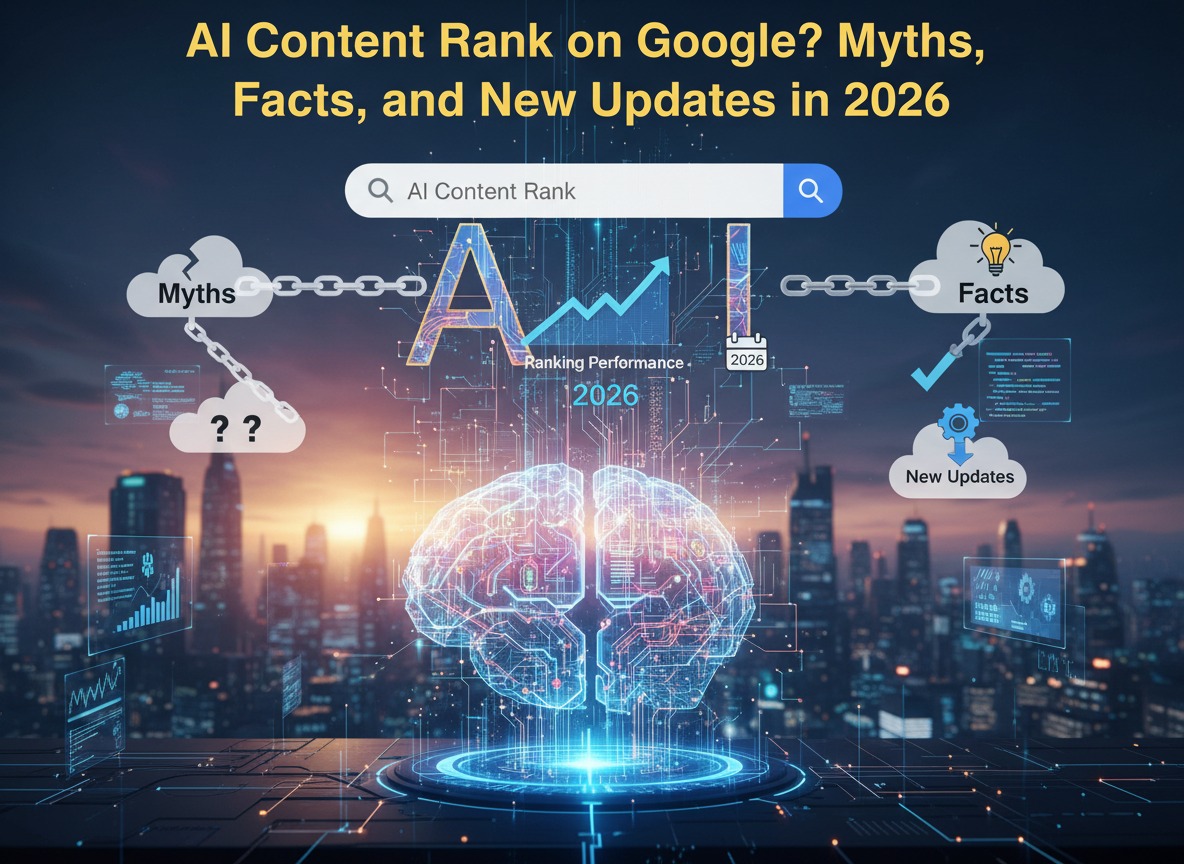
Content creation has been revolutionized by artificial intelligence (AI), but one of the most contentious issues in digital marketing today is whether AI-generated content actually ranks on Google. Companies seek clarification: “Can AI content help us show up on page one?” “Is AI writing penalized by Google?” “What is the actual method for getting content to appear in search results?”
This detailed, fact-verified blog provides answers to all these questions with actual evidence and professional insights.
What Is AI-Generated Content?
Text produced using artificial intelligence tools such as large language models (LLMs) is referred to as AI-generated content. These tools use algorithms to generate content based on user-provided prompts, keywords, data patterns, or topic inputs.
Although AI cannot think like a human, it can quickly generate large volumes of content, analyze data, and draft text. Examples include:
Q1: Can AI Content Rank on Google Search?
Short answer: Yes, AI-generated content can rank well on Google, but not just because it was created by AI. Regardless of whether the content was created with AI help, Google ranks pages according to value, relevance, and quality.
Here’s the reality:
Q2: Does Google Penalize AI Content?
No, not inherently.
Google’s core stance: poor content is penalized, not AI itself. (SEO.com)
Important points:
Rule of Thumb: If AI output is generic, shallow, or stuffed with keywords, it risks lower ranking, especially after core quality updates by Google.
Q3: How Does Google Evaluate AI Content?
Although Google does not disclose its entire algorithm, SEO research and public guidelines highlight important evaluation criteria:
- Relevance to User Intent
Content that most closely matches a user’s search query is ranked by Google. Content, whether human or AI-assisted, must offer reliable information or address a particular issue. - Originality and Value
AI content that simply reiterates concepts won’t be able to compete with content that has original ideas or professional input. - E-E-A-T: Expertise, Experience, Authority, Trustworthiness
E-E-A-T is emphasized in Google’s quality guidelines. Regardless of how it is produced, content that exhibits genuine expertise and trust signals ranks higher. - Helpful Content System
The idea behind Google’s algorithms is to reward content created for people rather than for just search engines-a principle that applies to AI content as well.
Q4: What Does Google Officially Say About AI Content?
Google’s search documentation clarifies that:
While Google hasn’t penalized all AI content, it will downgrade content that lacks useful substance.
Q5: Does Google Prefer Human Content Over AI Content?
Not inherently.
Google does not have a rule that says AI content is inferior to human-written content based only on how it was created. The usefulness of the final product is what matters to its ranking systems.
However, AI tends to generate generic text without personal insights. Human writers often inject:
That’s where human content still holds a strategic advantage.
Also Read: Zero-Click Searches and Their Impact on Content Writing and Blogging Services
Q6: How Do Search Algorithms Treat AI-Generated Content?
Google has systems in place to check the quality of content, no matter who made it. New artificial intelligence detection tools can affect how things are rated inside Google. They do not automatically lower the ranking of artificial intelligence content. Only the bad quality ones.
AI + SEO Insight:
Q7: Do AI Content and SEO Work Together?
Yes, but with a smart strategy.
AI Tools Can Help With:
But You Must Add:
This hybrid approach of using AI for efficiency plus human expertise for quality is currently the most effective model for ranking.
Q8: How Should Businesses Use AI Content for SEO Strategy?
Here’s the roadmap for companies that want to use AI-assisted content and rank well for it:
- Start with Audience Intent
“What question or information is the searcher trying to answer?” Content created must be goal-oriented. - Use AI for Structure, Not Replacement
AI can do great work summarizing an outline or doing research. It should never be considered a replacement for human knowledge or perspectives. - Inject E-E-A-T
Add expert quotes, case studies, statistics, and other credible sources. - Focus on AEO – Answer Engine Optimisation
Structure content so that it directly answers questions that readers might ask: Q&A format, direct responses, etc. This format meets Google’s ranking signals as well as AI’s answer engines, like search generative experiences. - Optimise for User Engagement
A page where readers are reading, interacting, and clicking is a good indicator for SEO success.
Q9: What Are the Risks of Poor AI Content?
These risks are not those of AI itself, but of the absence of editorial control and qualitative assessment.
Q10: Is AI Content a Long-Term SEO Strategy?
Yes, if done right.
AI is not a short-lived tactic. It is a part of the future of content creation and search. But Google’s long-standing algorithmic principles remain unchanged: prioritize user value, relevance, and helpfulness.
Instead of fearing AI, smart businesses adopt a human-centric, quality-first content workflow with AI support.
LBN Tech Solutions
Can AI content rank on Google? Yes, without question. Modern search engines like Google care about quality and helpfulness, not how content was created.
Ready to dominate search with AI-assisted content?
Let our digital marketing experts help you craft AI-optimized pages that rank, resonate, and convert.
Contact us today here for a content strategy audit and growth plan tailored to your business goals.
Categories
- Listings, Reviews, Mentions: Which Signal Matters Most to AI?
- Ads in ChatGPT: What They Are, How They Work, and What It Means for Small Businesses
- Can AI Recommendations Be Manipulated? What Small Business Owners Need to Know in 2026
- The AI Content Overload Problem: How Smart Brands Win Without Posting More in 2026
- The AI Layer of Social Media: What’s Really Happening Behind Every Scroll
- Reddit Marketing 101: An Intro to the Platform
- LLMs.txt and Google Search: What Marketers Really Need to Know in 2026
- Can AI Content Rank on Google? Myths, Facts, and New Updates in 2026
- Schema Markup: The Hidden Signal Helping Content Rank, Get Cited, and Show Up in AI Overviews
- AI Overview Optimisation: The New Frontier of SEO (and How We’re Winning It)
- Zero-Click Searches and Their Impact on Content Writing and Blogging Services
- From Keywords to Intelligence: The SEO–AI Evolution by 2026
- Is SEO Really Dead, or Has It Simply Evolved into Fuel for AI?
- The “See It, Want It, Buy It” Loop: How Fast Decision Cycles Are Quietly Rewriting Marketing (And What Small Businesses Must Do Now)
- Why Monthly Newsletters Still Work (And How to Make Yours Stand Out)
- The Ultimate Guide to Content Repurposing – The Underrated SEO Factor
- How Does Video Content Help Improve SEO?
- Top 12 Reasons Why Your Website Needs a Blog Corner
- Difference Between Copywriting and Content Writing
- Content Marketing – A Modern Guide for 2023
- What Is the Difference Between Content Marketing and Content Strategy?
- How to Write Compelling Headlines in 3 Steps
- Marketing in the Attention Economy: Why Capturing Attention Is Harder Than Ever (And What Smart Businesses Are Doing About It)
- Google Kills &num=100: Good or Bad for SEO?
- Brand Loyalty – Why Does It Matter and How to Build It?
- 5 Ways to Convert Your Visitors into Customers
- How to start a digital marketing agency from scratch and run it successfully? | Part 2
- How to start a digital marketing agency from scratch and run it successfully? | Part 1
- Digital marketing tips for preschool owners
- What are brand pillars, and why do they matter?
- How to Get the Results You Want through Your Digital Marketing Plan?
- Demystifying the Debate Around Influencer Marketing (How to Do It Correctly)
- How to Use Customer Service as an Online Marketing Strategy
- The Importance of Commenting in Forums for SEO
- What Is Moltbook? All Your Questions Answered About the Strange New Social Media for AI
- 4 Digital Marketing Incidents Everyone’s Talking About: Outages, Scams, Malware & Analytics Chaos
- Google Algorithm Updates – March 2024
- Google Ranking Algorithm Updates – February 2024
- Top Search Engine Marketing Tools to Use to Save Time and Money – Part 2
- Google Ranking Algorithm Updates – September & October 2023
- Top Search Engine Marketing Tools to Use to Save Money and Time – Part 1
- Google Ranking Algorithm Updates – August 2023
- Google Ranking Algorithm Updates – July 2023
- Google Ranking Algorithm Updates – June 2023
- Google Ranking Algorithm Updates – May 2023
- 10 Cool Things You Could Do with ChatGPT
- ChatGPT Is at Capacity Now – How to Fix This Error?
- ChatGPT – Is It the Future or Just the Latest AI Fad?
- 5 Ways Technology Might Be Blocking Your Business Progress
- Trends That May Shape the Future of Digital Marketing
- The Significance of Meta Description in 2024
- What are the 9 basic rules Google follows for Featured Snippets?
- What is agile marketing?
- How will Core Web Vitals enhance SEO in 2024?
- Digital Marketing Trends for 2024
- What Are the Major Elements of an Ideal E-Commerce Website?
- Ecommerce Website: Benefits, Working and Development Process
- Choosing the Right E-Commerce Web Development Company: A Comprehensive Guide
- E-Commerce Site Search – Best Practices to Increase Conversion (Part – 2)
- E-Commerce Site Search – Best Practices to Increase Conversion (Part – 1)
- What Is E-Commerce Merchandising and How Can It Help Improve Sales?
- Top 5 Reasons Why Your Business Needs a Website in 2023
- How to Write a Product Description for eCommerce Websites
- Types of Ad Fraud and Invalid Traffic: A Complete Guide for Businesses
- Meta Andromeda Explained: Why Small Brands Need to Rethink Meta Ads Now
- Google’s New ‘Sponsored Results’ Update – What Businesses Should Know Now
- How to Create a Demand Generation Campaign in Google Ads
- Demystifying Demand Gen Ads: Understanding the Power of Awareness and Engagement
- Why Is Search Engine Marketing Important?
- Google Ads Checklist for 2024
- Difference between Organic and Paid Search Results
- Essential Rules and Strategies for Effective Healthcare Content Marketing
- Healthcare’s Content Revolution: Statistics and Strategies for Reaching Today’s Patients
- Healthcare Marketing: Loyalty-Building Techniques and Basic Healthcare Marketing Content Ideas
- The Essential Guide to Content Marketing for Modern Healthcare Organizations
- Healthcare Marketing through the Ages: The Vital Role of Digital Transformation
- Setup GA4, Search Console & Tag Manager with Expert Help from LBN Tech Solutions
- Get Found on Facebook, Instagram, X, and LinkedIn – Professionally Set Up by Experts
- Brand Yourself with Every Email – The Power of a Custom Email Signature by LBN
- Why You Need a Domain and Branded Email – Even Without a Website
- The Pareto Principle of SEO: Why Small Businesses Should Stop Trying to Fix Everything at Once
- 9 Beginner Mistakes Most Small Businesses Make in SEO
- 11 Actionable On-Page SEO Factors You Need to Know
- Cracking the Code: Mastering On-Page SEO for Website Excellence
- Off-Page SEO – Best Short-Term and Long-Term Strategies to Employ
- Off-Page SEO Ranking Factors That Everyone Should Know About
- Off-Page SEO – What Is It and How Can You Get the Best Out of It?
- Top 5 SEO Mistakes to Avoid
- What to Expect from a Professional SEO Company?
- What is the Role of SEO in the Web Design/Development Process?
- Is Trying To Rank SEO without an SSL (HTTPS) Pointless?
- How We Brought Down the Bounce Rate from 93% to 5% (Case Study)
- How to Rank Higher on Voice Searches
- Best AI Tools for Small Business Marketing in 2026: The Complete Guide for Owners Who Are Tired of Being Outspent
- 11 Reasons Why Having an E-commerce Website Is More Important Than Ever
- 5 Mobile Marketing Techniques That Can Grow Your Business
- Lead Generation Basics for Small Business Owners
- How to Conduct a Competitive Analysis?
- How to Win Social Media Without Posting Daily
- How TVK won Tamilnadu in 2026: The strategy, the story and the business lessons
- Empowering Women in Digital Marketing: Job Opportunities, Career Paths, and Top Interview Questions Answered
- How to Market using Social Media for Different Generations
- Tips to Handle Digital Branding Like an Expert
- WhatsApp Ads Decoded: Everything You Must Know About This Marketing Game Changer
- Digital Marketing vs. Digital Branding – What’s the Difference?
- Website vs. Social Media: Is a Website Still Necessary for a Business?
- What Should Small Businesses Post on Social Media? (A Complete Guide)
- The making of the first ever Digital Women Economic Forum
- Schema Markup: The Hidden Signal Helping Content Rank, Get Cited, and Show Up in AI Overviews
- Schema Mark-up in SEO: A Guide to Types, Benefits, and Importance
- How to Track Website Calls and Email Clicks in GA4 Using Google Tag Manager
- How to Set Up Google Tag Manager: A Step-by-Step Guide
- What is Google Tag Manager? How does it work and what are the Benefits of using Google Tag Manager?
- The Ultimate Guide to Profile Page Structured Data
- Mastering Schema Markup: Unravelling the Secrets of Schema, Supported Formats, and Implementation
- Reasons Why Google May Penalize Your Website
- Mobile-First Design vs. Responsive Design – What’s the Difference in 2026?
- Top 10 CMS Platforms for Website Design and Blogging
- Website Redesign Mistakes to Avoid – Professional Website Redesign Services
- 10 Clear Signs Your Website Needs a Redesign and Why It’s a Smart Investment
- The Importance of UI/UX Design in Web Development
- What Are the Phases Involved in Web Development?
- A Beginner’s Guide to Web Development
- What Is CMS and How Can It Be Used in Website Development?
- Why Should You Consider Redesigning Your Website?
- What Is the Process of Web Design and How Does It Differ from DIY Solutions?
- Web Design Trends of 2026 – What Small Businesses Need to Know